
「Antique Stablecoin」 Depegs Overnight, Evaporating $18 Million: Can Synthetix’s sUSD Still Buy the Dip?


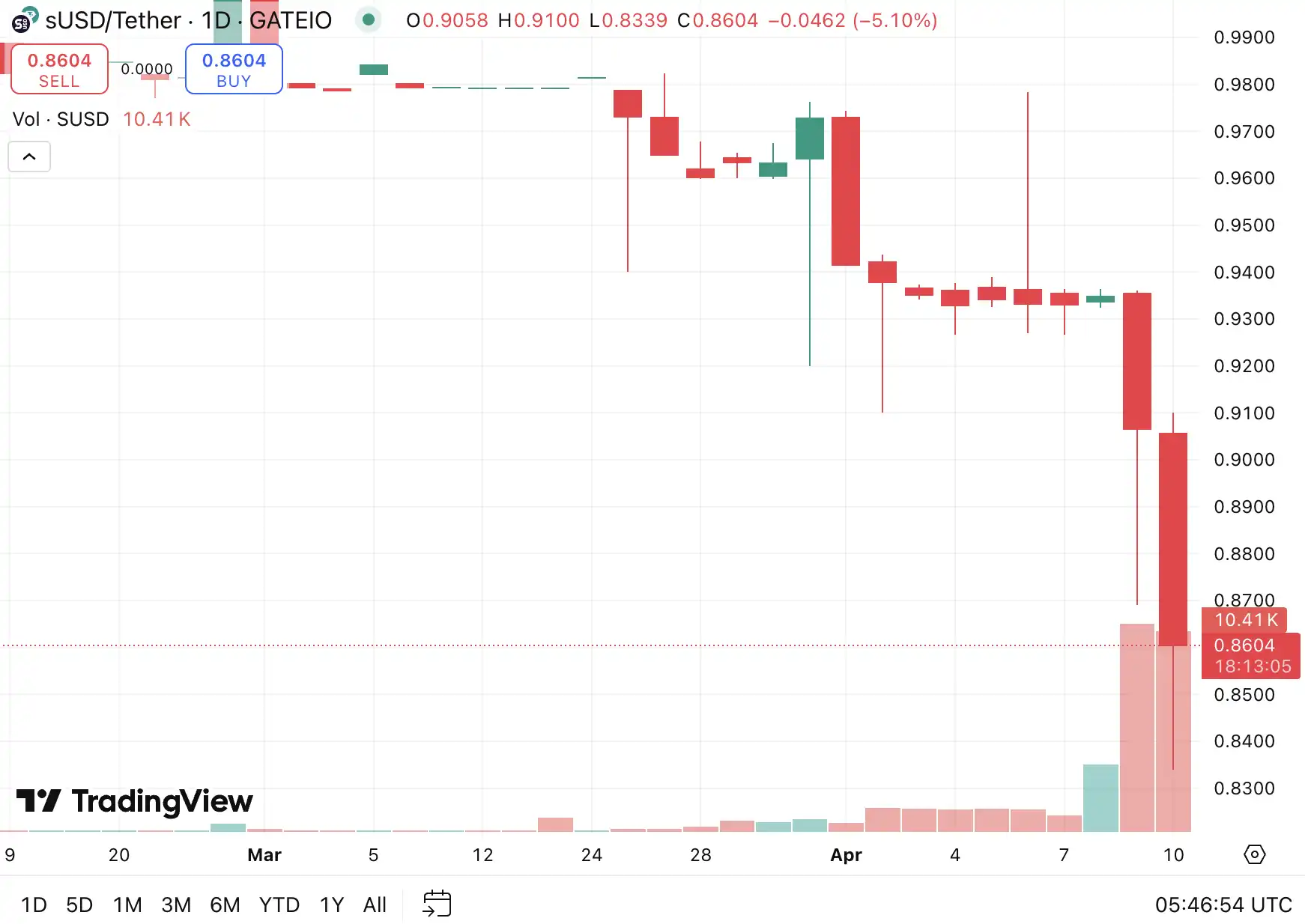
The crypto world is ever-changing, and the "stability" of stablecoins often faces many challenges. On April 10, the stablecoin sUSD in the Synthetix ecosystem experienced a significant deviation from its peg, with the lowest price dropping to $0.834 and currently trading at $0.860, deviating approximately 8% from its $1 anchor. This swift fluctuation quickly sparked community discussions, with many expressing concerns that this could signal a new stablecoin crisis.
Mechanism Upgrade Leads to Short-Term Deviation
Following the event, Synthetix founder Kain Warwick explained the incident via X platform and disclosed that he had sold 90% of his ETH holdings, increasing his SNX position. Warwick stated that the sUSD deviation was not a sign of systemic crisis but rather a temporary "side effect" caused by a crucial mechanism upgrade in Synthetix.
This should be the second deviation event in sUSD history. The last time was on May 17, 2024, although the reasons were different. According to the blockchain security firm Chaos Labs, last year's deviation was mainly due to a large sBTC/wBTC liquidity provider suddenly withdrawing funds, redeeming sUSD through Synthetix's spot synthetic redemption mechanism, and causing a massive sell-off in the related Curve liquidity pool.
For a long time, sUSD's peg relied on a complex debt management mechanism: users collateralize the native token SNX to mint sUSD, and the system maintains its 1:1 peg to the dollar through high collateralization ratios and debt adjustments. With the adjustment of Synthetix's strategic direction, this old mechanism has been gradually removed, replaced by a more efficient, decentralized new system—the "420 Pool" under the SIP 420 proposal. The transition from the old to the new mechanism inevitably brought transitional pains, and the short-term deviation of sUSD is a manifestation of this process.
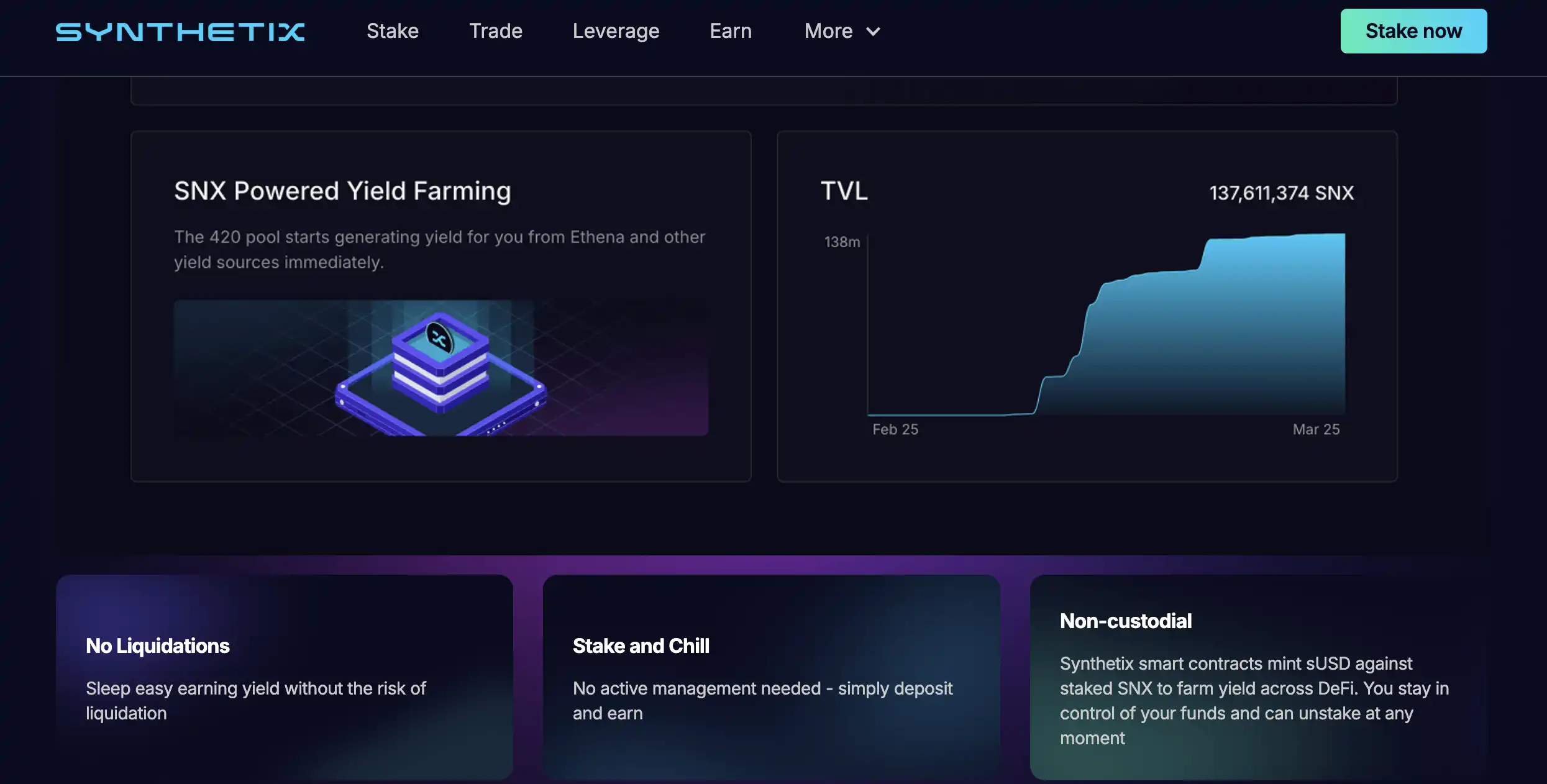
Specifically, under the old mechanism, when the sUSD price dropped below $1, collateralizers could profit by buying back sUSD at a discount and burning debt, naturally driving the price back up. However, with the abandonment of the old mechanism and the new mechanism not yet fully in place, the excess sUSD liquidity in the market temporarily lost effective regulatory means, putting pressure on the price. Warwick emphasized that this volatility is only temporary, and once the new debt management system is fully deployed, the long-term stability of sUSD will be significantly improved. Warwick reiterated the nature of sUSD as a collateralized stablecoin whose value is supported by assets such as SNX, rather than relying on a complex algorithm to adjust supply and demand, fundamentally different from the algorithmic stablecoins that once collapsed.
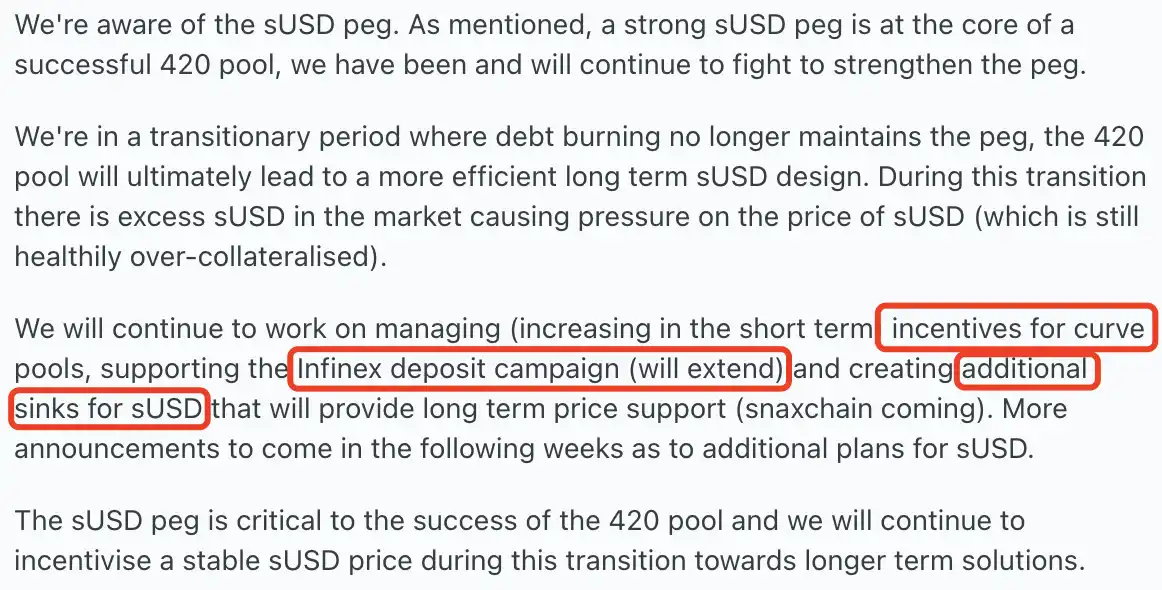
For SNX holders and sUSD users, the team has also developed a detailed plan for the transition period. The Synthetix team further elaborated on the contingency measures through Discord, including strengthening incentives for the Curve liquidity pool in the short term, extending support for Infinex deposit activity, and building a long-term price support system for sUSD.
Attention on "Ancient Stablecoin" Unpegging, What Has Synthetix Been Up to Lately?
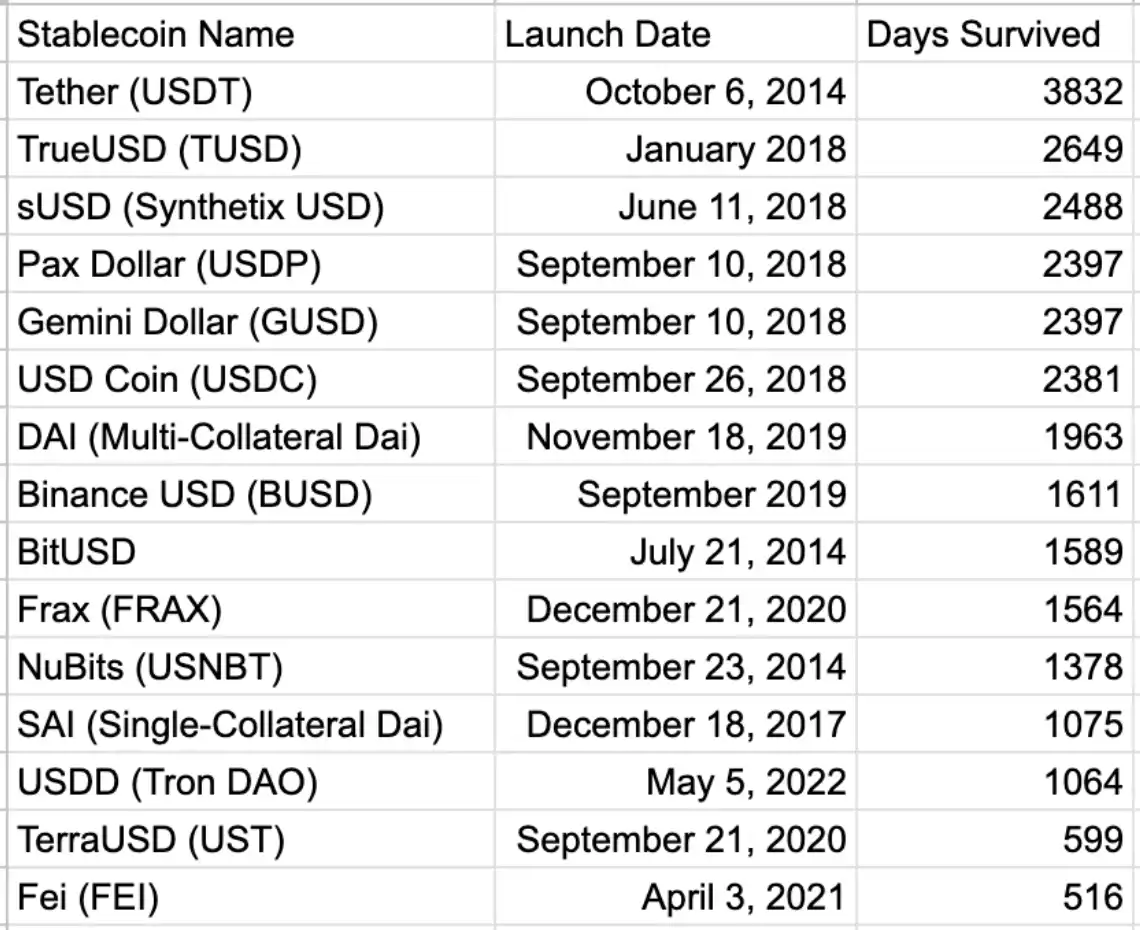
To further understand the current situation of sUSD, let's first review the development history of stablecoins. The origin of stablecoins can be traced back to 2014, a year that witnessed the birth of the first stablecoins: Tether's USDT, BitShares' bitUSD, and Nubits. Although bitUSD and Nubits did not stand the test of time and gradually faded into history, USDT has survived to this day due to its first-mover advantage and strong market adaptability, becoming the world's largest stablecoin by trading volume. The success of USDT has not been without challenges, as its price experienced a significant decoupling in 2017. However, to this day, USDT still holds the top position in the stablecoin market.
2018 was another pivotal year in the development of stablecoins. DeFi emerged, giving rise to several iconic stablecoins. MakerDAO's DAI, Synthetix's sUSD, and Terra's UST made their debut. Meanwhile, the CeFi sector witnessed a second wave of stablecoin craze, including Circle's USDC, TrueUSD (TUSD), Gemini's GUSD, and Paxos' PAX. These projects each had their own characteristics: DAI achieved decentralized anchoring through overcollateralized ETH, sUSD supported a synthetic asset ecosystem with a high collateralization rate through SNX, and USDC boasted a redeemable fiat reserve as its selling point. In this history, different types of stablecoins gradually diverged into two main paths: collateralized and algorithmic. Collateralized stablecoins are backed by real-world assets for higher stability but are susceptible to fluctuations in collateral prices. On the other hand, algorithmic stablecoins adjust supply and demand through smart contracts to maintain peg, theoretically offering greater capital efficiency but are prone to losing control during market volatility.
In 2021, DeFi projects widely recognized the strategic value of proprietary stablecoins, and many protocols began to vigorously develop stablecoin ecosystems. However, Synthetix chose to gradually marginalize sUSD, a decision that is undoubtedly a significant mistake in today's context. The SIP 420 proposal passed in early 2025 brought new opportunities for sUSD. The new mechanism introduced a collective pool model, reduced the collateralization ratio to 200%, and planned to forgive $62 million in historical debt over 12 months, significantly improving capital efficiency and system security. With the old debt destruction mechanism obsolete and the new stable module not yet fully in place, the current unpegging is a result of the transitional period.
Looking around, the competition in the stablecoin space remains fierce. Although sUSD is still the third oldest stablecoin in the cryptocurrency realm, albeit not as prominent as before, its longevity (i.e., Lindy effect) has endowed it with unique resilience. The current mechanism adjustment may just be another upgrade on its evolutionary path.
In the short term, the price of sUSD may continue to fluctuate within a 5-10% discount range, but with ample reserves in its treasury, the likelihood of a complete collapse is low. In the long run, with the implementation of a new mechanism, sUSD is expected to regain its footing in the Synthetix ecosystem. The history of stablecoins tells us that the real strong ones are often survivors who constantly adjust amidst the storms.
You may also like

SK Hynix Reportedly Plans U.S. ADR Listing as Early as August, With SEC Approval Possible in Late June
SK Hynix may pursue a U.S. ADR listing as early as August, with SEC approval reportedly possible in late June amid strong AI chip supply chain demand.

SpaceX vs Tesla vs xAI: Which Elon Musk Trade Has the Biggest Upside in 2026?

OpenAI Reveals It Has Confidentially Submitted an S-1 to the SEC, Keeping the Door Open for a Future IPO
On June 9, according to an OpenAI announcement, the company recently confidentially submitted a draft S-1 registration statement to the U.S. Securities and Exchange Commission (SEC), beginning the preliminary compliance process for a potential initial public offering. OpenAI said it chose to disclose this proactively because it expected the news might leak; however, the company has not yet set a specific listing timeline, and related arrangements may still take some time.

Latest research from 13 top universities including Cornell University: The current state, challenges, and misconceptions of the fusion of Crypto and AI
Deconstructing Anthropic: The Best AI Company, Possibly Also a Type of Organizational Invention
Apollo and Blackstone Reportedly Back $35 Billion Anthropic Chip Financing as Deal Details Remain Unclear
On June 9, according to currently available news alerts, Apollo and Blackstone Group participated in a $35 billion financing for an Anthropic “chip project.” Based on the original wording of the report, the funding has already been raised, but public information remains limited. The financing structure, use of proceeds, project entity, and whether Apollo and Blackstone participated through equity, debt, or project financing have not yet been disclosed.

Humanity Protocol Security Incident Escalates: More Than $31 Million Stolen From Related Addresses as Attacker Continues Selling H for ETH
On June 9, according to monitoring by Onchain Lens, more than $31 million has been stolen from addresses linked to Humanity Protocol, and the attack is still ongoing, with the hacker continuously swapping H tokens for ETH. Project founder Terence Kwok later confirmed the security incident on X, saying the issue involved a private key leak.

Bloomberg: As Bitcoin Weakens, Stablecoins and RWA Continue to Drive Expansion in Crypto Businesses
In June, Bloomberg reported that despite Bitcoin falling below $60,000 last week, wiping out about $235 billion in market value within seven days, and dropping close to 50% from last year’s peak, some core businesses in the crypto industry are still expanding, mainly in stablecoins, real-world asset tokenization (RWA), payments, and infrastructure. The report also noted that overall altcoin activity has contracted significantly: altcoin market capitalization has fallen from a peak of about $431 billion in November 2021 to around $170 billion, and among the tens of millions of tokens issued in recent years, fewer than 1,700 still maintain meaningful trading activity.

Galaxy Deep Research Report: How Hyperliquid's HIP-4 Upgrade Changes the Landscape of Prediction Markets?
Binance Research: RWA Market Expected to Expand Nearly 6x from Early 2025, with Public Equities and Onchain Payments Heating Up Together
In June, Binance Research said in its monthly market report that the real-world asset (RWA) market is expected to grow by about 589% from the beginning of 2025. Bond- and money market fund-related RWA expanded by about $6.5 billion, up 83% year over year, while publicly traded equity RWAs grew by about 422%. The report also noted that monthly crypto debit card transaction volume exceeded $747 million in May, up 48.6% year to date.

Japan to Assess a Framework for Yen Stablecoins and Crypto ETFs as Asia’s Compliant Payments Narrative Heats Up
Recently, according to the original report, Japan is considering the launch of yen stablecoins and cryptocurrency ETFs. Public information remains limited at this stage, and there is still no complete policy text, regulatory draft, or clear implementation timeline, so this is better characterized as a “policy discussion” rather than formal implementation. The original wording also noted that advancing stablecoin regulation in Asia is driving XRP usage and supporting growth in the XRPL ecosystem. However, based on currently available public information, there is not enough evidence to directly establish a clear causal relationship between this round of discussion in Japan and XRP or XRPL.

ZachXBT: Humanity private key leak and abnormal surge in H token should be viewed separately
On June 9, according to related disclosures, on-chain investigator ZachXBT posted an update on Humanity’s roughly $31 million security incident, saying that after further analyzing fund flows, he currently tends to believe the project team was not involved in an “inside job” or a self-staged attack. According to him, the official explanation about the private key leak was broadly accurate, but before the token unlock, the price of H had been artificially pushed higher, and the hacker later took advantage of that market environment; therefore, the private key leak and the earlier abnormal price pumping should be regarded as two separate and independent events. This reframing has shifted the market’s understanding of the nature of the incident. Earlier discussion around Humanity had focused on whether the team directly participated in the attack or used the security incident to cover up internal operations. ZachXBT’s latest remarks shift the focus from “whether it was self-theft” to “whether there were pre-unlock market structure issues.” He also questioned whether the team may have.

Morning Report | OpenAI has submitted an S-1 registration statement draft to the U.S. SEC; Morpho completes $175 million financing

Morning Report | BitMine increased its holdings by 126,971 ETH last week; trader Eugene announced his exit from the crypto market

Wang Chuan: How can one not feel anxious after the neighbor Old Wang made thirty times profit by investing in storage stocks? (Seven) - A quarter-century cycle
Cryptocurrency CEXs are flocking to sell US stocks, and traditional brokerages are facing an "uninvited guest."
$75 billion in foreign capital has fled, and South Korean retail investors have absorbed it all using leverage

Japan’s Three Megabanks Plan Joint Stablecoin Issuance in Fiscal 2026
MUFG, SMBC, and Mizuho reportedly plan to jointly issue fiat-pegged stablecoins in fiscal 2026, signaling Japan’s growing push into bank-led digital payment infrastructure.
SK Hynix Reportedly Plans U.S. ADR Listing as Early as August, With SEC Approval Possible in Late June
SK Hynix may pursue a U.S. ADR listing as early as August, with SEC approval reportedly possible in late June amid strong AI chip supply chain demand.
SpaceX vs Tesla vs xAI: Which Elon Musk Trade Has the Biggest Upside in 2026?
OpenAI Reveals It Has Confidentially Submitted an S-1 to the SEC, Keeping the Door Open for a Future IPO
On June 9, according to an OpenAI announcement, the company recently confidentially submitted a draft S-1 registration statement to the U.S. Securities and Exchange Commission (SEC), beginning the preliminary compliance process for a potential initial public offering. OpenAI said it chose to disclose this proactively because it expected the news might leak; however, the company has not yet set a specific listing timeline, and related arrangements may still take some time.
Latest research from 13 top universities including Cornell University: The current state, challenges, and misconceptions of the fusion of Crypto and AI
Deconstructing Anthropic: The Best AI Company, Possibly Also a Type of Organizational Invention
Apollo and Blackstone Reportedly Back $35 Billion Anthropic Chip Financing as Deal Details Remain Unclear
On June 9, according to currently available news alerts, Apollo and Blackstone Group participated in a $35 billion financing for an Anthropic “chip project.” Based on the original wording of the report, the funding has already been raised, but public information remains limited. The financing structure, use of proceeds, project entity, and whether Apollo and Blackstone participated through equity, debt, or project financing have not yet been disclosed.


