
Hyperliquid 'Unplug' Forced Settlement: TVL Significantly Drops, Significant USDC Outflow Trend



Original Title: "To Offset Over $200 Million in Losses, Hyperliquid's "Unplug the Ethernet Cable" Forced Settlement Sparks Controversy"
Author: Asher, Odaily Planet Daily
Don't pretend to be decentralized, and don't pretend that traders really care about this.
After experiencing the "Hyperliquid 50x Leverage Whale" long liquidation event (related content can be found: Why did the Hyperliquid Whale Self-Destruct? Who is Bearing the Loss of Millions of Dollars?), Hyperliquid encountered a similar crisis again last night. This time, the attacker's target was more precise, choosing the meme coin JELLY, with a smaller market cap and more susceptible to manipulation, as a breakthrough point.
In a short period of time, the price of JELLY experienced a violent fluctuation, with a 15-minute candlestick chart showing an increase of over 100% and a decrease of over 50%, plunging the market into extreme conditions, causing short-term traders to exclaim, "Nerve-wracking, retail investors liquidated within minutes." How did this hunting operation unfold? Odaily Planet Daily will deeply analyze the event for everyone.
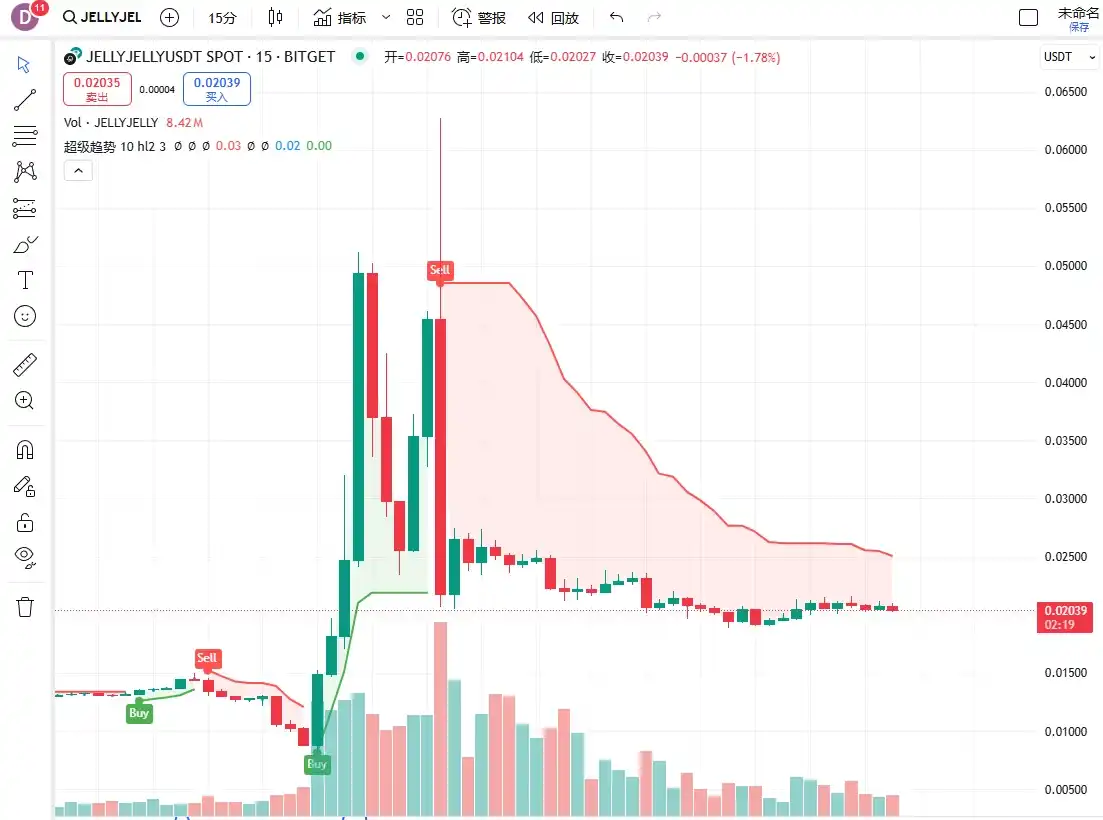
JELLY 15-Minute Candlestick Chart
Event Recap: Hyperliquid Treasury Takes Over JELLY Short Position, From Near Liquidation to "Forcefully" Lossless Liquidation
A Trader Opens a Massive JELLY Short Position
At 8:53 PM yesterday, a trader (opening address link: https://hypurrscan.io/address/0xde9593fe5cdc5cb0917f5d5618a111f1174f5c91) transferred 3.5 million USDC to Hyperliquid as collateral and opened a 430 million JELLY short position (worth approximately $4.08 million) on the platform at a price of $0.0095.
Hyperliquid Treasury Receives Massive Short Position due to Trader's Auto-Liquidation
A wallet manipulating the JELLY price (price manipulation address link: https://intel.arkm.com/explorer/address/Hc8gNSMaQiahiRiGjUfTaW8AXudRJHeGoeGpAn8WRcwq) coordinated with the trader to dump the spot market after the short position opened, suppressing the price, creating a profit margin for the short position. At 9:03 PM yesterday, the trader closed 30 million JELLY of the short position at a price of $0.0103 (worth approximately $310,000), subsequently withdrew $2.76 million in collateral, causing the 398 million JELLY short position (worth approximately $4.5 million) to be liquidated forcefully by Hyperliquid's liquidation address at a price of $0.0113.
JELLY Price Surges Rapidly, Hyperliquid Treasury Once Faces Multi-Million-Dollar Unrealized Loss
At 9:45 PM yesterday, intense buying pressure from the price manipulation address further amplified the treasury's unrealized loss, with the Hyperliquid treasury once facing a more than $10 million unrealized loss. According to on-chain analyst @ai_9684xtpa's monitoring, if the market were to push the price to around $0.17, the treasury would face liquidation and lose the current $240 million it holds. Based on the treasury's deposit and withdrawal records at the time, some of the treasury funds were seen escaping, but the amounts were insignificant, likely from retail holders.
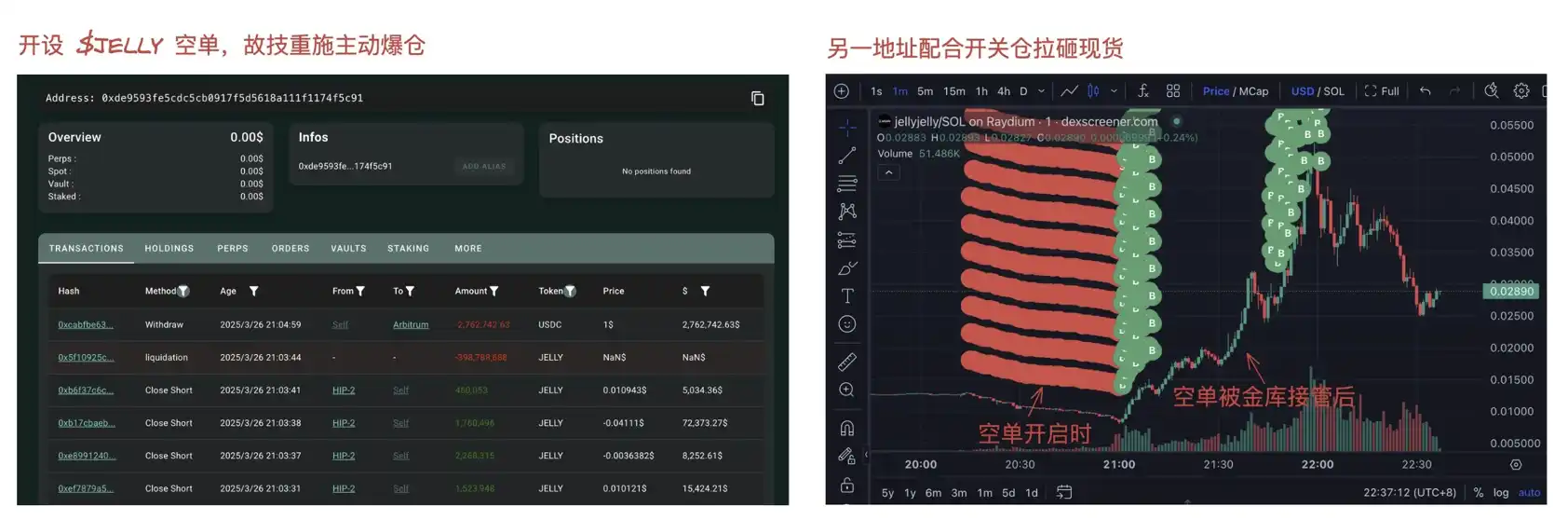
Hyperliquid Treasury Under Attack
Hyperliquid Delists JELLY as OKX and Binance Successively List JELLY Perpetual Contract Trading
According to KOL Wang Xiaoer (@brc20niubi)'s description on Platform X (CZ also commented on the content), a few minutes before OKX and Binance announced the listing of JELLY perpetual contract trading, Hyperliquid had already prepared to surrender and completely delisted JELLY trading. The following image shows Wang Xiaoer's retrospective on Hyperliquid's actions in this incident and CZ's comments.
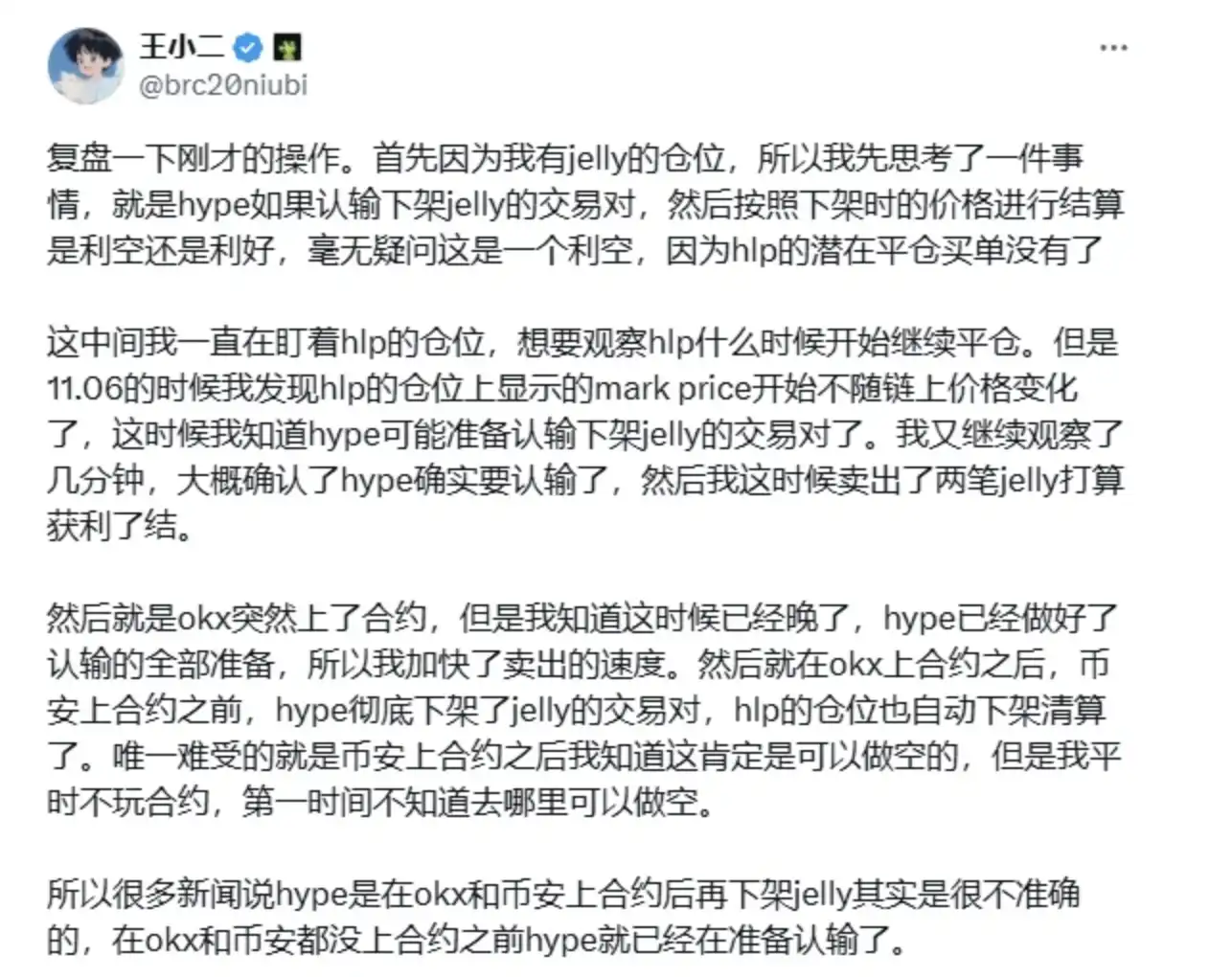

KOL Wang Xiaoer's Retrospective on Hyperliquid Incident Actions
Final Move of "Pulling the Plug": Settling JELLY at $0.0095 Price Resulted in Not Only No Loss but Also Profit
"I heard you wanted to liquidate me, so I settled my position directly." After Hyperliquid delisted JELLY, it settled at a price of $0.0095 (the opening price of the JELLY short trader) for a total of 3.92 billion JELLY tokens. In the end, far from experiencing any losses, it actually made a profit of $703,000.
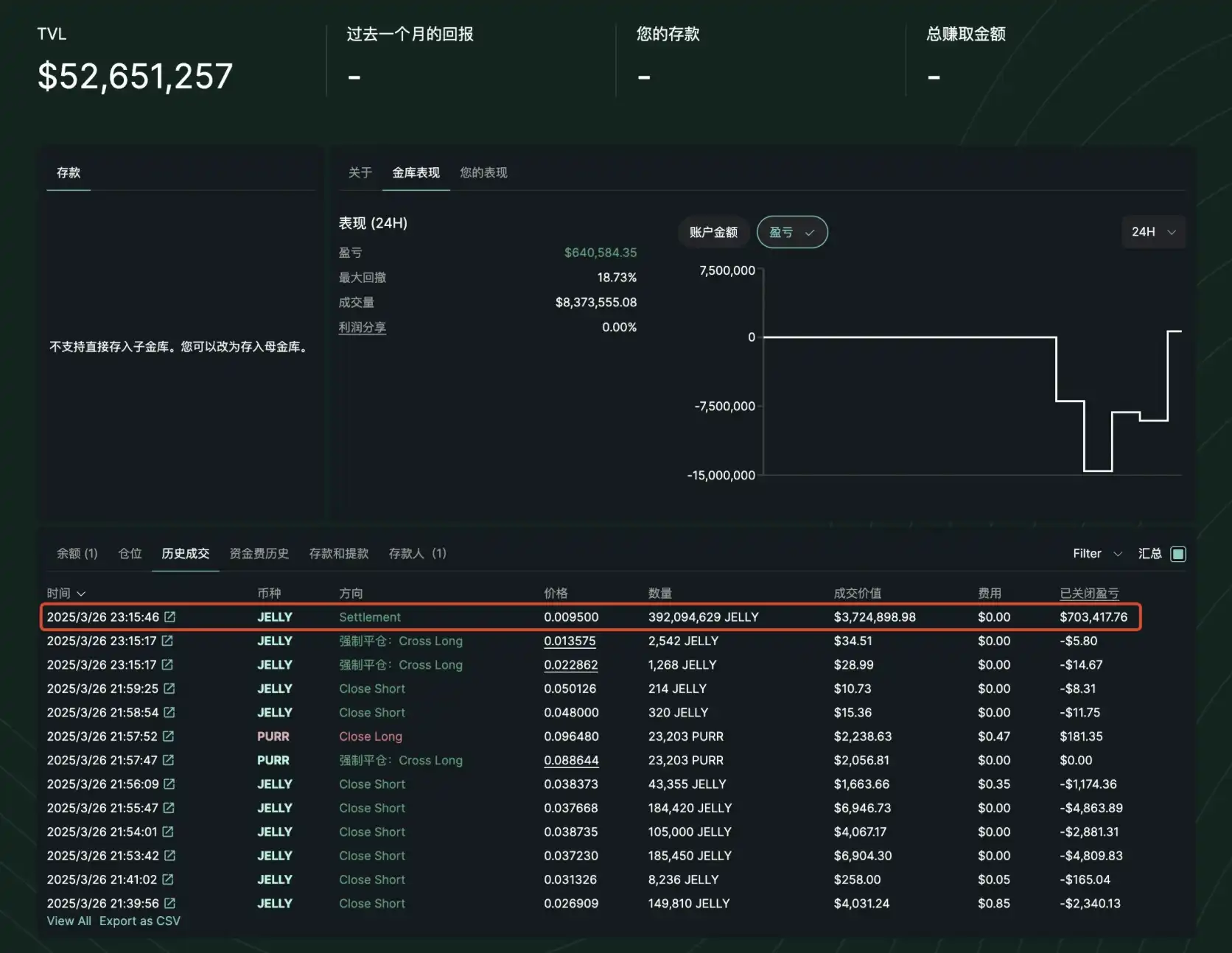
Not Only No Loss but Also $700,000 in Profit
Official Response: Validator Consensus to Delist JELLY, User Losses to Be Covered by Hyper Foundation
In response to the "Hyperliquid's delisting of JELLY and settlement at a favorable price of $0.0095," such a "centralized" action, the official team has promptly issued a positive response to the event. The specifics are as follows:
Due to abnormal market activity, validators reached a consensus to delist the JELLY perpetual contract. Following collective discussions among the validators, it was decided to remove the JELLY trading pair to maintain market fairness. Apart from the flagged addresses, all user funds lost will be compensated by the Hyper Foundation. The compensation will be automatically executed based on on-chain data, and users will not need to submit any support tickets. The specific calculation method will be detailed in a subsequent announcement;
The validator consensus mechanism contributes to maintaining network stability. Similar to other blockchains, validators sometimes need to make coordinated decisions to address emergent situations and safeguard network integrity. Currently, the transparency of the system and the robustness of the voting mechanism will be the focus of improvements to enhance governance effectiveness;
The current 24-hour profit of HLP is approximately 700,000 USDC, with ongoing technical enhancements. Through this event, the team will optimize the system, strengthen risk resilience, and make the network more robust after learning from the experience. Further details will be announced later.
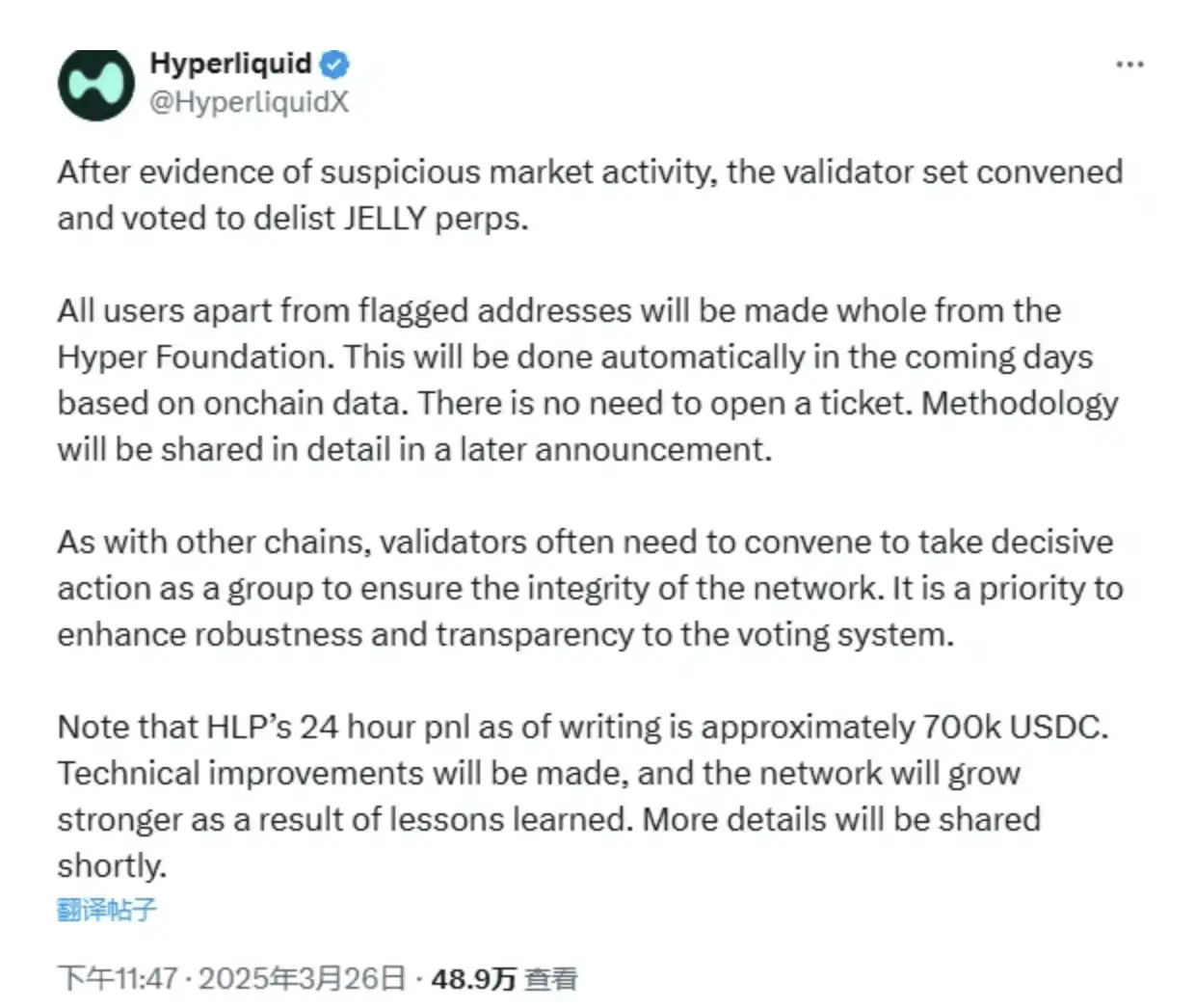
Official Response to the Settlement of JELLY at a Favorable Price
Although the official team emphasized that the removal of the JELLY trading pair was the result of validator consensus, as a decentralized exchange, Hyperliquid's "pulling the plug" such a "centralized" action inevitably raised more questions. Odaily Star Daily has compiled industry experts' views on this event.
Industry Discussion on the Hyperliquid JELLY Liquidation Event: Centralized Control, Trust Crisis, and Systemic Risk
Arthur Hayes: Stop Pretending to Be Decentralized; HYPE Will Return to Square One
BitMEX co-founder Arthur Hayes posted on Platform X sharply commenting on the "Hyperliquid JELLY liquidation event," stating, "HYPE cannot bear the impact of the JELLY event. Let's stop pretending that Hyperliquid is decentralized; then pretend that traders really care; I bet HYPE will soon return to square one because gamblers are ultimately gamblers."
ZachXBT: Hyperliquid Official Unfazed by North Korean Hackers Using Stolen Funds to Short the Market, but Manipulating Price
On-chain detective ZachXBT criticized Hyperliquid in a post on Platform X, stating: "What is infuriating is that the Hyperliquid team can casually draw lines to manipulate the price, but when North Korean hackers use Radiant to steal funds and hold a significant short position on the platform, they remain unfazed."
Bitget CEO: Hyperliquid on the Path to FTX 2.0
Bitget CEO Gracy Chen posted on Platform X, stating that Hyperliquid's handling of the JELLY incident was both immature and unethical, lacking professionalism, resulting in user losses and severe damage to its reputation. Although the platform claims to be an innovative decentralized exchange with a bold vision, its actual operation is more like an offshore centralized exchange without KYC/AML mechanisms, enabling illegal fund flows and misconduct. The decision to close the JELLY market and forcibly settle positions at favorable prices sets a dangerous precedent. For any exchange (whether CEX or DEX), trust is more important than funds, and once lost, it is almost irrecoverable.
Furthermore, the platform's product design has serious flaws: the mixed liquidity pool exposes users to systemic risks, and unrestricted position sizes provide opportunities for market manipulation. If these issues are not addressed, more meme coins may be used to attack Hyperliquid, putting it at risk of becoming the next significant collapse in the crypto industry.
Andre Cronje: Position Size is Not a Fixed Function of Leverage, DeFi Should Not Have Fixed Value Leverage
In response to the Hyperliquid treasury facing liquidation and losses, Sonic Labs co-founder Andre Cronje posted on Platform X, stating: Position size is not a fixed function of leverage but depends on available liquidity and realized volatility; a small position can be leveraged 1000 times, while a large position may only have 1.2 times leverage. In DeFi, there should be no fixed value.
CZ Quotes Old Post Saying DEX Inferior to CEX, and Emphasizes Unrelated to Hyperliquid Liquidation Event
Additionally, CZ quoted a previous tweet on Platform X, saying: "I know I'm not that smart. When I don't understand, I admit it, and I often feel that those talented people must have mastered something I don't know to do what I can't. But occasionally, I find: the most basic rules still apply." It is worth noting that CZ specifically explained that to avoid confusion, the tweet is unrelated to today's Hyperliquid liquidation event; it was his past experience trying AstherusHub on the BSC chain, a project in the Labs investment portfolio. They do not display liquidation prices and use automatic deleveraging (ADL), so similar issues will not occur today.
Impact on Hyperliquid: Significant TVL Drop, Noticeable USDC Outflow
Several hours have passed since the event, and the surface turmoil seems to have subsided. However, its impact on Hyperliquid remains profound and "weighty." According to data from the Hyperliquid official website, HLP's TVL was as high as $240 million before the event, but has now dropped significantly to $195 million, with nearly 20% of funds lost in a short period. This sharp fluctuation reflects a wavering trust in the platform by the market, indicating that investor confidence has yet to be restored.
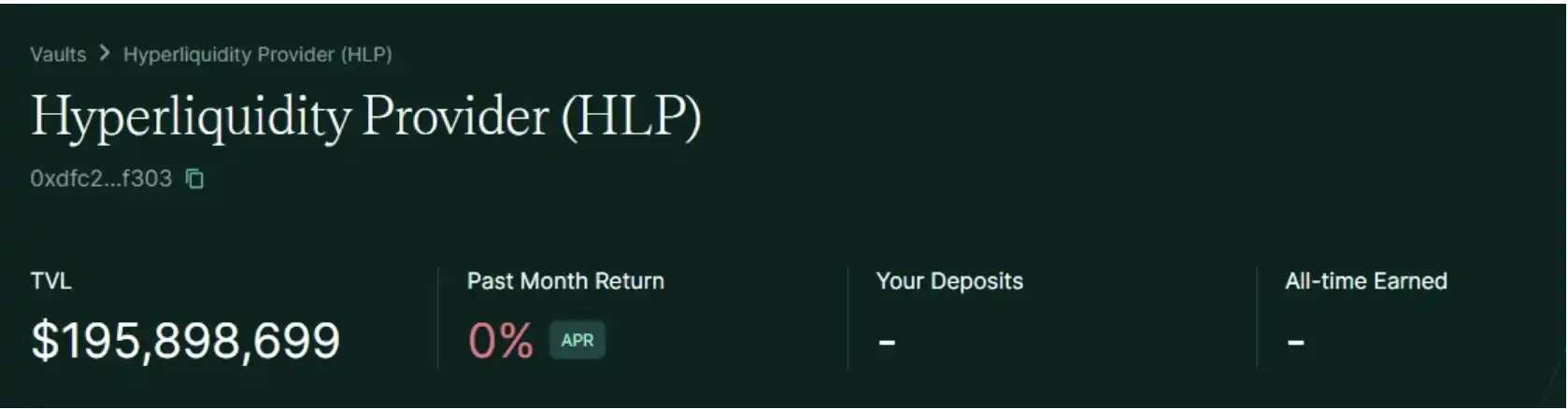
HLP TVL on Hyperliquid
Furthermore, according to DefiLlama data, following the Hyperliquid liquidation event, a substantial outflow of USDC funds from the platform has occurred, with a net outflow totaling $175 million. The total USDC holdings plummeted from $2.217 billion before the event to $2.004 billion.
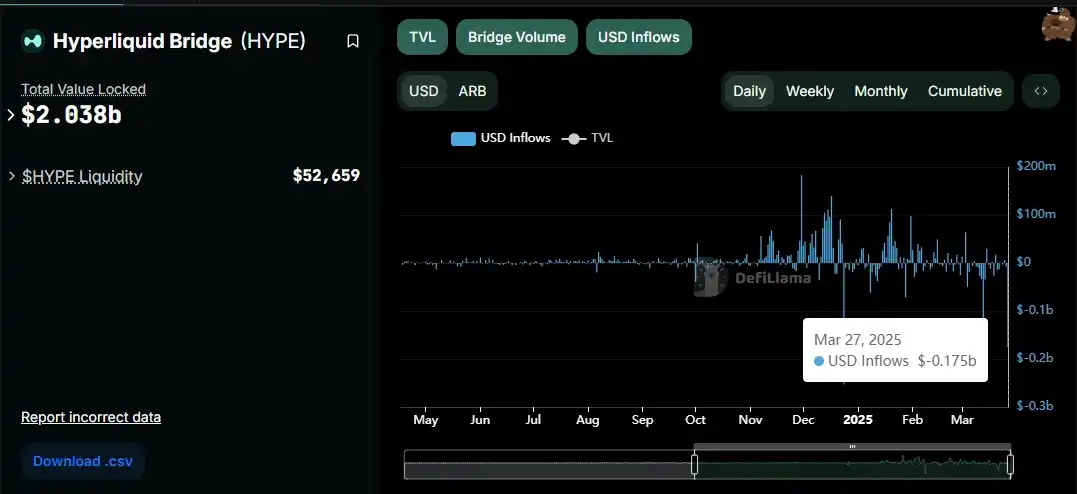
Net USDC Outflow Data on Hyperliquid
Conclusion
The recent hunting incident involving Hyperliquid has brought the governance and transparency issues of decentralized perpetual contract exchanges into the spotlight. While the reason officially given was that validators voted to delist the trading pair, the final direct "pulling of the plug" for a forced settlement has led many to question how decentralized DeFi exchanges truly are. 
This event also serves as a reminder to all DeFi projects that merely relying on the "decentralized" label is far from sufficient. When facing extreme market conditions, the key question is whether a platform can maintain stability while upholding fairness and transparency. In the future, for on-chain decentralized DeFi projects to earn market trust, they must strike a better balance between transparency, governance mechanisms, and risk management. Otherwise, similar crises may not be the last.
You may also like

Cryptocurrency CEXs are flocking to sell US stocks, and traditional brokerages are facing an "uninvited guest."

Will the SpaceX IPO Hurt Bitcoin? Here's What Traders Are Watching
Foreign selling in the South Korean stock market accelerates, with cumulative net sales reportedly reaching $75 billion this year
On June 9, The Kobeissi Letter, citing Goldman Sachs data, reported that global investors are selling South Korean stocks at an unusually rapid pace. In the latest trading session, foreign investors sold about $801 million worth of Kospi constituent stocks again; total foreign outflows last week reached about $10 billion, and the market has been in net foreign selling on nearly every trading day over the past month. According to the data cited in the report, foreign investors have sold about $75 billion worth of South Korean stocks so far this year. Meanwhile, South Korean retail and institutional investors together recorded roughly $69 billion in net buying over the same period, suggesting that the market’s main buying support has come from domestic capital rather than returning overseas funds. The information currently disclosed still mainly comes from The Kobeissi Letter’s retelling and Goldman Sachs data summaries, while public details on the statistical period and the specific definition of “selling” remain relatively limited.

Fortune Warns of Strategy’s Financing Structure Risks as Bitcoin Premium Narrows
Fortune warned that Strategy’s Bitcoin treasury model faces growing financing risks as MSTR’s net asset premium narrows and preferred stock dividend pressure increases.

Ferrari Challenge Le Mans: Carl Moon to Dominate in WEEX Livery

Sahara AI Responds to SAHARA’s Sharp Drop: No Contract or Product Security Issues Found, Internal Investigation Underway
Sahara AI responded to SAHARA’s 60% price drop, saying no token contract or product security issues have been found and an internal investigation is underway.

WEEX Deposit/Withdrawal Dynamic Island: Your Asset Status, Always in Sight

Scaling Crypto Derivatives: The Digital Asset Infrastructure Behind High-Volume Trading
In the fast-moving digital asset ecosystem, derivatives platforms face an extreme architectural test. High-leverage futures markets demand more than just standard security—they require absolute operational precision, zero-latency matching engines, and ironclad structural scalability, all while navigating intense market volatility.
As global platforms scale to meet these demands, the industry is shifting away from rigid, monolithic setups toward a more agile, "decoupled" infrastructure philosophy.
The Blueprint for High-Volume Copy TradingFor elite global exchanges like WEEX (founded in 2018), this architectural choice becomes critical when scaling high-volume retail features like social copy trading. When thousands of users automatically mirror the real-time strategies of elite traders simultaneously, it triggers sudden, monumental spikes in concurrent transactional volume.
To prevent execution latency or settlement bottlenecks during these peak volatility events, a platform's primary engine must remain entirely dedicated to risk management, copy-trade synchronization, and order matching.
The Architectural Rule: New-generation platforms must separate front-end user execution engines from heavy backend infrastructural overhead to eliminate operational friction.
By separating these layers, platforms can maintain complete sovereignty over their trading environments and user experiences while strategically aligning with institutional-grade infrastructure ecosystems. This strategic framework allows modern exchanges to leverage advanced Digital Asset Custody infrastructure such as Cobo’s behind the scenes, ensuring that backend wallet management scales elastically alongside trading spikes.
Capitalizing on Market Momentum and 400× LeverageIn a derivatives arena where platforms offer up to 400× leverage on perpetual contracts, capital efficiency and market agility are core business metrics. To capture market momentum, an exchange needs the ability to rapidly expand its asset offerings, supporting everything from legacy crypto assets to sudden, trending altcoins across a massive library of trading pairs.
Adopting a flexible, scalable Wallet-as-a-Service (WaaS) solution such as Cobo’s could completely rewrite the development timeline for high-growth exchanges. Instead of spending months of engineering capital building out custom backend wallet architectures for every new blockchain network, platforms can deploy localized infrastructure in days.
This agility allows platforms to instantly scale their listings to over a thousand trading pairs without compromising security or delaying time-to-market. It mirrors the exact operational advantages seen during high-velocity market events, similar to how advanced wallet infrastructure empowers platforms during sudden asset surges; allowing exchanges to pass that speed and liquidity directly to their global user base.
A Mature Foundation for GrowthThe synergy between trusted infrastructure ecosystems and global trading platforms represents the natural evolution of a maturing crypto market. As WEEX continues to scale its global spot and derivatives offerings for over 6 million users, adopting robust backend paradigms proves that platforms no longer have to compromise between cutting-edge trading velocity and uncompromised structural security.

Morning Report | BitMine increased its holdings by 126,971 ETH last week; trader Eugene announced his exit from the crypto market

Wang Chuan: How can one not feel anxious after the neighbor Old Wang made thirty times profit by investing in storage stocks? (Seven) - A quarter-century cycle

Get Paid to Onboard? Try WEEX’s New Homepage with Rewards for Registration, Deposit & Trade

WEEX Custom Layout: Build Your Perfect Trading Workspace in Seconds

See “Buy Walls” & “Sell Walls” Instantly: WEEX Launches the Depth Chart for Smarter Trades

What Is Quick Trade on WEEX? 2 Ways WEEX Ends Chart-Panel Jumping
Morning News | Five major virtual asset platforms in South Korea have experienced 57 incidents of hacking and system failures in six years; Grayscale submits registration application for Canton ETF

Should we escape the peak? The principle of the tail-end market in the stock market

RootData: May 2026 Cryptocurrency Exchange Transparency Research Report

Founder of Baixing.com: My Experience with Claude Code in Fourteen Points
Cryptocurrency CEXs are flocking to sell US stocks, and traditional brokerages are facing an "uninvited guest."
Will the SpaceX IPO Hurt Bitcoin? Here's What Traders Are Watching
Foreign selling in the South Korean stock market accelerates, with cumulative net sales reportedly reaching $75 billion this year
On June 9, The Kobeissi Letter, citing Goldman Sachs data, reported that global investors are selling South Korean stocks at an unusually rapid pace. In the latest trading session, foreign investors sold about $801 million worth of Kospi constituent stocks again; total foreign outflows last week reached about $10 billion, and the market has been in net foreign selling on nearly every trading day over the past month. According to the data cited in the report, foreign investors have sold about $75 billion worth of South Korean stocks so far this year. Meanwhile, South Korean retail and institutional investors together recorded roughly $69 billion in net buying over the same period, suggesting that the market’s main buying support has come from domestic capital rather than returning overseas funds. The information currently disclosed still mainly comes from The Kobeissi Letter’s retelling and Goldman Sachs data summaries, while public details on the statistical period and the specific definition of “selling” remain relatively limited.
Fortune Warns of Strategy’s Financing Structure Risks as Bitcoin Premium Narrows
Fortune warned that Strategy’s Bitcoin treasury model faces growing financing risks as MSTR’s net asset premium narrows and preferred stock dividend pressure increases.
Ferrari Challenge Le Mans: Carl Moon to Dominate in WEEX Livery
Sahara AI Responds to SAHARA’s Sharp Drop: No Contract or Product Security Issues Found, Internal Investigation Underway
Sahara AI responded to SAHARA’s 60% price drop, saying no token contract or product security issues have been found and an internal investigation is underway.


