
sUSD Depreciates by 16%: Stablecoin Myth Busted or Buying Opportunity?



Original Title: "sUSD Depegging by 16%: A Shattered Stablecoin Myth or a Buy-the-Dip Opportunity?"
Original Author: Oliver, Mars Finance
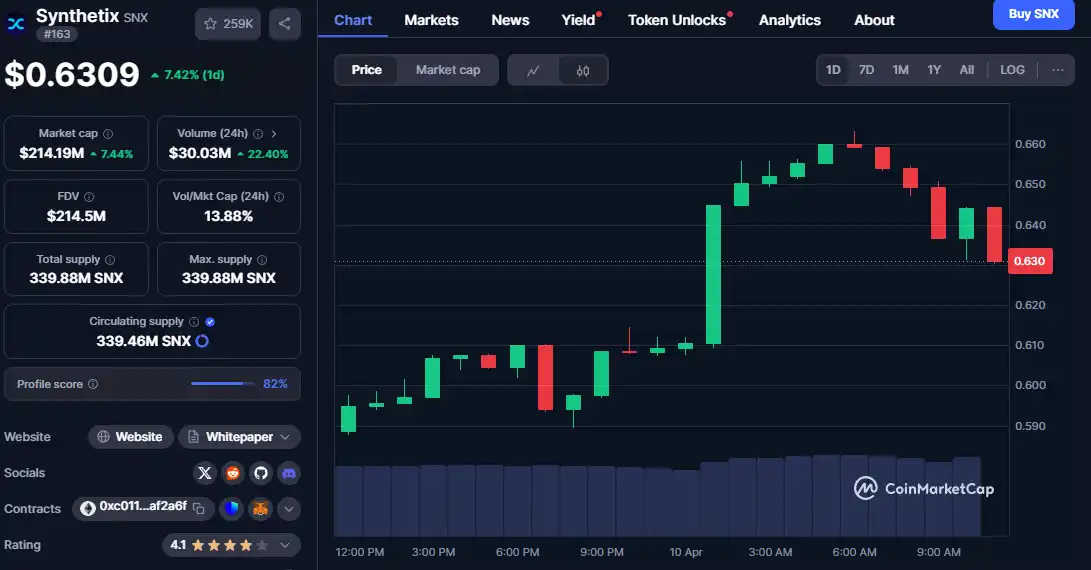
The core stablecoin of the Synthetix ecosystem, sUSD, has recently been deeply embroiled in a depegging quagmire. As of April 9, 2025, its price fell to around $0.8388, deviating over 16% from its theoretical $1 peg, attracting significant market attention. This crisis began on March 20 and has lasted for over 20 days, with the depegging magnitude continuing to expand. Meanwhile, the native token of Synthetix, SNX, has been rising against the trend, with a daily increase of 7.5%, displaying a complex market sentiment. Kain Warwick, the founder of Synthetix (@kaiynne), attributed the depegging to the transitional pains of mechanism adjustments and revealed that the protocol has sold 90% of its ETH position and increased its SNX holdings to cope.
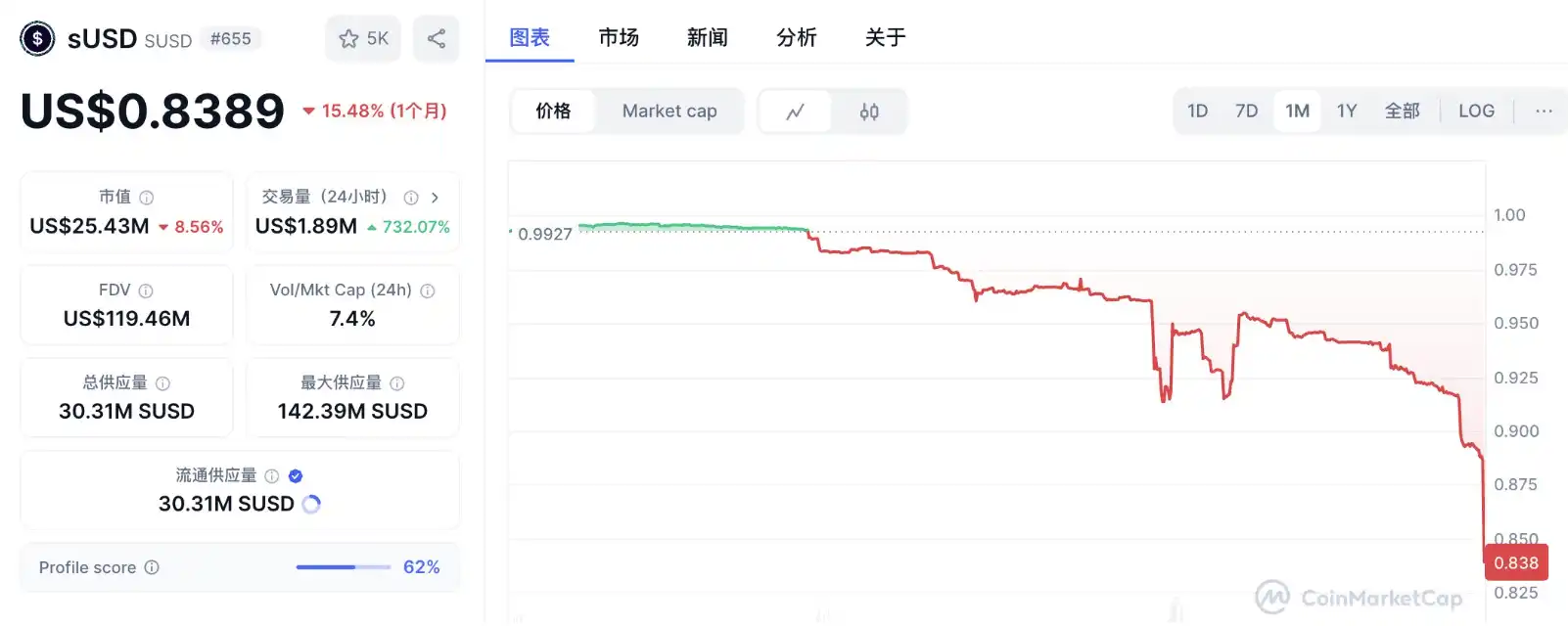
Timeline of Events: The Progressive Deterioration of Depegging
The depegging of sUSD did not occur overnight. On March 20, 2025, its price first showed a slight deviation, initially not raising widespread alarm. However, as time passed, the volatility gradually evolved into a downward trend. By April 9, according to CoinMarketCap data, the quoted sUSD price had dropped to $0.8388, more than 16% below the pegged value. This depegging, lasting for over 20 days, not only exceeded the expected timeframe but also far surpassed the market's typical tolerance range for stablecoins, revealing the deep-seated complexity of the issue.
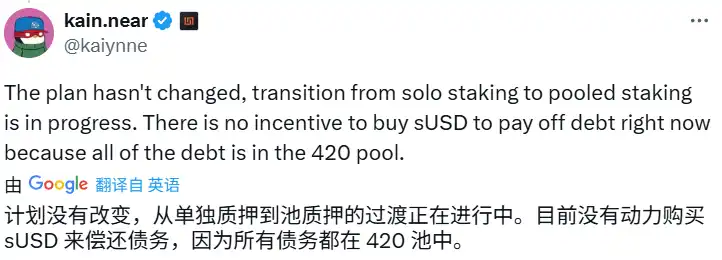
Kain Warwick explained this on the X platform, stating that the depegging was an expected side effect of the SIP-420 proposal's implementation. The proposal aimed to optimize the SNX staking mechanism and capital efficiency by introducing a centralized debt pool (the "420 Pool"); however, the alternation between old and new mechanisms temporarily disrupted sUSD's peg repairability. He frankly stated that at this stage, there is "no incentive for users to buy sUSD to repay debt," and the imbalance of supply and demand became the direct driver of the price decline. Additionally, the protocol's strategy of selling 90% of its ETH position and increasing its SNX holdings, while intended to strengthen internal support, may have weakened the system's liquidity and external stability foundation, adding more uncertainty to the market.
Depegging Root Cause: The Overlay of Mechanism Transition and Market Feedback
The root cause of this recent de-pegging was not singular but rather a result of intertwined mechanism adjustments and market behaviors, presenting a multi-dimensional challenge.
The implementation of SIP-420 was the core trigger of the crisis. Synthetix's stablecoin mechanism relies on overcollateralization of SNX, where users stake SNX to mint sUSD and bear the fluctuation risk of the system's debt pool. Under the old mechanism, a collateralization ratio of up to 750% and debt repayment incentives collectively maintained the stability of sUSD. However, SIP-420 shifted the individual staking model to a centralized debt pool, aiming to enhance the attractiveness of SNX staking. This transition theoretically injected long-term potential into the ecosystem, but during the transition period, it disrupted the existing equilibrium. Warwick admitted that the new mechanism has not yet fully matured, and the old anchoring stabilization feature was temporarily suspended, causing sUSD to lose its self-regulating mechanism.
Market behaviors further amplified the de-pegging effect. Data from X platform indicated that some users concentratedly exchanged sUSD for USDT or USDC on decentralized trading platforms like Curve, depleting the liquidity pool's balance through selling pressure rapidly. Taking the Curve DAI-USDC-USDT-sUSD pool as an example, the proportion of sUSD temporarily surged, reflecting a decline in market confidence in stability. With a market cap of only $25 million, sUSD itself had weak liquidity, and any concentrated selling could trigger significant slippage, causing the price to further deviate from its peg.
Protocol-level adjustments also brought about unexpected side effects. The decision to sell 90% of ETH and increase SNX holdings, while strengthening SNX's dominant position in the ecosystem, reduced the system's diversification support. ETH, as a widely accepted collateral in the market, exiting could diminish external trust in sUSD, while SNX's volatility increased concentration risk. This strategy might boost confidence during an SNX price increase, but amid a prolonged de-pegging scenario, it instead cast a shadow over the recovery process.
Historical Comparison
This is not the first time sUSD has de-pegged. Looking back to May 16, 2024, sUSD fell to $0.915 due to a whale selling sBTC for sUSD, causing a de-pegging of approximately 8.5%. At that time, insufficient Curve pool liquidity combined with MEV arbitrage bots' sniper attacks led to a brief price loss of control. Synthetix promptly took action by adding collateral such as ETH, BTC, USDC to boost confidence and providing liquidity incentives on Velodrome and Curve, successfully re-anchoring to $1 after 11 days. That de-pegging event was essentially an external shock, with the mechanism itself remaining intact and a clear and efficient path to recovery.
In contrast, the 2025 anchor break presents a starkly different scenario. This crisis stemmed from internal mechanism adjustments under SIP-420, rather than a singular external sell-off, significantly increasing the complexity of the issue. The 2024 anchor break lasted for 11 days with an 8.5% drop, while the current one has surpassed 20 days with a drop of over 16%, indicating the severity and persistence of the problem. Furthermore, the response in 2024 relied on liquidity incentives and collateral diversification, whereas the 2025 strategy leans more towards internal adjustments (such as selling ETH to increase SNX exposure), with short-term effects yet to materialize. This indicates that the experiences of 2024 cannot be directly applied, with the repair difficulty far exceeding the past.
Feasibility Analysis of Buying the Dip in sUSD
The current sUSD price hovers around $0.84. For investors, is it feasible to buy the dip and wait for a re-anchor? The experience of 2024 provides some insights. Back then, sUSD rebounded from $0.915 to $1, and dip buyers saw around a 9% return within two weeks, with the key to success lying in quick incentive measures and the short-lived nature of external shocks. Now the price is lower ($0.84), the potential returns are higher (around 19%), but the risks are also magnified.
Positive factors should not be overlooked. The 7.5% increase in SNX reflects market confidence in Synthetix remaining intact, with the team's proactive stance and debt relief plan injecting hope into the recovery. With a small market cap, sUSD requires low funds, and if the protocol introduces incentives, even small buy orders can drive up the price. However, the risks are significant as well. The anchor break has exceeded 20 days, and the duration is unknown. If new mechanism debugging is delayed, the repair may be prolonged for months. Selling pressure remains, pool imbalances on Curve may further depress prices, and the loss of user confidence may weaken demand.
Using $100,000 as an example, buying around 119,000 sUSD at $0.84, if it re-anchors to $1, one could profit $19,000, with a return of 19%. However, it is advised to set a stop-loss level (e.g., $0.75) and closely monitor protocol announcements. If Synthetix introduces incentives similar to those in 2024, the odds of buying the dip will significantly increase. If the price stabilizes and SNX continues to rise, a small position can be established. Compared to the low-risk window of 2024, this opportunity offers higher returns but comes with greater uncertainty.
Market Response and SNX's Anomaly
Despite sUSD being deeply embroiled in an anchor break crisis, SNX recorded a 7.5% single-day increase on April 9th, a striking contrast. The market's optimism may stem from expectations of long-term benefits from SIP-420. If the new mechanism is successfully implemented, it could enhance SNX's staking rewards and ecosystem position, boosting Synthetix's competitiveness in the DeFi space. The "Debt Jubilee" debt relief plan mentioned by Warwick may also inject confidence into investors, implying that clearing historical debts will lighten the system's burden.
The community reaction has been polarized. On the X platform, some users are concerned that sUSD may fall into a "death spiral," questioning the rationale behind the mechanism adjustment. On the other hand, some believe that the $25 million market cap of sUSD has limited impact, and that SNX's rise is the true reflection of market confidence. Professional analysis firms such as The Merkle News have pointed out that the transitional risk of SIP-420 was underestimated, but SNX's performance indicates that Synthetix still has the potential to turn the situation around.
Summary
From an industry perspective, the impact of sUSD's de-pegging is relatively limited. Its $25 million market cap is negligible in the stablecoin market, far below the scale of USDT or USDC, and has a small spillover effect on the DeFi ecosystem. However, for Synthetix internally, persistent de-pegging may shake user trust. If liquidity continues to drain from the pools, the utility of sUSD will be limited, further weakening its position in synthetic asset trading.
In the short term, intensified de-pegging may lead to more sell-offs, putting further pressure on the price. However, SNX's resilience has bought the protocol a time window. If the new mechanism can stabilize in the coming weeks, coupled with a debt relief plan, sUSD still has a chance to re-peg. In the long term, Synthetix needs to learn from this crisis, optimize stablecoin design, and avoid a similar crisis recurrence. The success of the mechanism adjustment will determine whether it can stand firm in the fiercely competitive DeFi market.
Unlike the external shock of 2024, the endogeneity of this crisis makes its path to recovery more tortuous. The Synthetix team must work on both mechanism optimization and rebuilding market confidence to weather the storm. For investors, the $0.84 sUSD is both a risk exposure and a potential opportunity. Whether bottom fishing or waiting and watching, closely monitoring the protocol's subsequent dynamics will be crucial. In this de-pegging storm, Synthetix's future direction is worth continuous tracking.
You may also like

Meet the new WEEX trial fund—your gateway to greater profits

WEEX Labs Lands at Dutch Blockchain Week: A Disruptive Crypto × AI Conversation Sets Sail in Amsterdam

SK Hynix Reportedly Plans U.S. ADR Listing as Early as August, With SEC Approval Possible in Late June
SK Hynix may pursue a U.S. ADR listing as early as August, with SEC approval reportedly possible in late June amid strong AI chip supply chain demand.

SpaceX vs Tesla vs xAI: Which Elon Musk Trade Has the Biggest Upside in 2026?
OpenAI Reveals It Has Confidentially Submitted an S-1 to the SEC, Keeping the Door Open for a Future IPO
On June 9, according to an OpenAI announcement, the company recently confidentially submitted a draft S-1 registration statement to the U.S. Securities and Exchange Commission (SEC), beginning the preliminary compliance process for a potential initial public offering. OpenAI said it chose to disclose this proactively because it expected the news might leak; however, the company has not yet set a specific listing timeline, and related arrangements may still take some time.

Latest research from 13 top universities including Cornell University: The current state, challenges, and misconceptions of the fusion of Crypto and AI
Deconstructing Anthropic: The Best AI Company, Possibly Also a Type of Organizational Invention
Apollo and Blackstone Reportedly Back $35 Billion Anthropic Chip Financing as Deal Details Remain Unclear
On June 9, according to currently available news alerts, Apollo and Blackstone Group participated in a $35 billion financing for an Anthropic “chip project.” Based on the original wording of the report, the funding has already been raised, but public information remains limited. The financing structure, use of proceeds, project entity, and whether Apollo and Blackstone participated through equity, debt, or project financing have not yet been disclosed.

Humanity Protocol Security Incident Escalates: More Than $31 Million Stolen From Related Addresses as Attacker Continues Selling H for ETH
On June 9, according to monitoring by Onchain Lens, more than $31 million has been stolen from addresses linked to Humanity Protocol, and the attack is still ongoing, with the hacker continuously swapping H tokens for ETH. Project founder Terence Kwok later confirmed the security incident on X, saying the issue involved a private key leak.

Bloomberg: As Bitcoin Weakens, Stablecoins and RWA Continue to Drive Expansion in Crypto Businesses
In June, Bloomberg reported that despite Bitcoin falling below $60,000 last week, wiping out about $235 billion in market value within seven days, and dropping close to 50% from last year’s peak, some core businesses in the crypto industry are still expanding, mainly in stablecoins, real-world asset tokenization (RWA), payments, and infrastructure. The report also noted that overall altcoin activity has contracted significantly: altcoin market capitalization has fallen from a peak of about $431 billion in November 2021 to around $170 billion, and among the tens of millions of tokens issued in recent years, fewer than 1,700 still maintain meaningful trading activity.

Galaxy Deep Research Report: How Hyperliquid's HIP-4 Upgrade Changes the Landscape of Prediction Markets?
Binance Research: RWA Market Expected to Expand Nearly 6x from Early 2025, with Public Equities and Onchain Payments Heating Up Together
In June, Binance Research said in its monthly market report that the real-world asset (RWA) market is expected to grow by about 589% from the beginning of 2025. Bond- and money market fund-related RWA expanded by about $6.5 billion, up 83% year over year, while publicly traded equity RWAs grew by about 422%. The report also noted that monthly crypto debit card transaction volume exceeded $747 million in May, up 48.6% year to date.

Japan to Assess a Framework for Yen Stablecoins and Crypto ETFs as Asia’s Compliant Payments Narrative Heats Up
Recently, according to the original report, Japan is considering the launch of yen stablecoins and cryptocurrency ETFs. Public information remains limited at this stage, and there is still no complete policy text, regulatory draft, or clear implementation timeline, so this is better characterized as a “policy discussion” rather than formal implementation. The original wording also noted that advancing stablecoin regulation in Asia is driving XRP usage and supporting growth in the XRPL ecosystem. However, based on currently available public information, there is not enough evidence to directly establish a clear causal relationship between this round of discussion in Japan and XRP or XRPL.

ZachXBT: Humanity private key leak and abnormal surge in H token should be viewed separately
On June 9, according to related disclosures, on-chain investigator ZachXBT posted an update on Humanity’s roughly $31 million security incident, saying that after further analyzing fund flows, he currently tends to believe the project team was not involved in an “inside job” or a self-staged attack. According to him, the official explanation about the private key leak was broadly accurate, but before the token unlock, the price of H had been artificially pushed higher, and the hacker later took advantage of that market environment; therefore, the private key leak and the earlier abnormal price pumping should be regarded as two separate and independent events. This reframing has shifted the market’s understanding of the nature of the incident. Earlier discussion around Humanity had focused on whether the team directly participated in the attack or used the security incident to cover up internal operations. ZachXBT’s latest remarks shift the focus from “whether it was self-theft” to “whether there were pre-unlock market structure issues.” He also questioned whether the team may have.

Morning Report | OpenAI has submitted an S-1 registration statement draft to the U.S. SEC; Morpho completes $175 million financing

Morning Report | BitMine increased its holdings by 126,971 ETH last week; trader Eugene announced his exit from the crypto market

Wang Chuan: How can one not feel anxious after the neighbor Old Wang made thirty times profit by investing in storage stocks? (Seven) - A quarter-century cycle
Cryptocurrency CEXs are flocking to sell US stocks, and traditional brokerages are facing an "uninvited guest."
Meet the new WEEX trial fund—your gateway to greater profits
WEEX Labs Lands at Dutch Blockchain Week: A Disruptive Crypto × AI Conversation Sets Sail in Amsterdam
SK Hynix Reportedly Plans U.S. ADR Listing as Early as August, With SEC Approval Possible in Late June
SK Hynix may pursue a U.S. ADR listing as early as August, with SEC approval reportedly possible in late June amid strong AI chip supply chain demand.
SpaceX vs Tesla vs xAI: Which Elon Musk Trade Has the Biggest Upside in 2026?
OpenAI Reveals It Has Confidentially Submitted an S-1 to the SEC, Keeping the Door Open for a Future IPO
On June 9, according to an OpenAI announcement, the company recently confidentially submitted a draft S-1 registration statement to the U.S. Securities and Exchange Commission (SEC), beginning the preliminary compliance process for a potential initial public offering. OpenAI said it chose to disclose this proactively because it expected the news might leak; however, the company has not yet set a specific listing timeline, and related arrangements may still take some time.
Latest research from 13 top universities including Cornell University: The current state, challenges, and misconceptions of the fusion of Crypto and AI


