
ZKcandy Empowers Web3 Mobile Game with L2 Mainnet Integration



Singapore, April 8, 2025, Chainwire
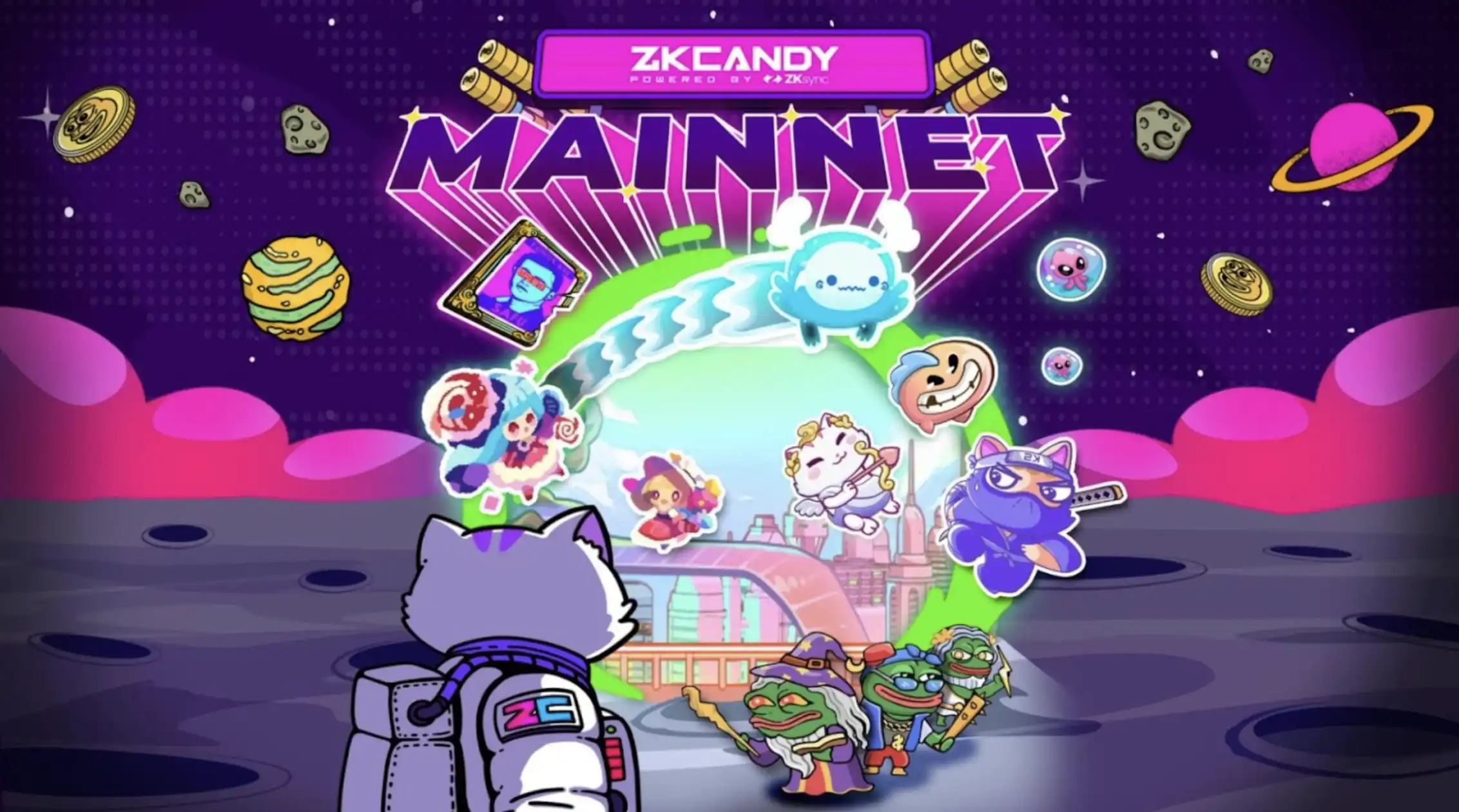
The AI-driven game entertainment Layer-2 network ZKcandy, jointly developed by ZKsync and iCandy Interactive, was officially launched on the mainnet today. Prior to this, the platform had successfully completed the testnet phase and secured a $4 million seed round investment from Wemix Pte. Ltd., Animoca Ventures, and renowned institutions and angel investors. With strong support, ZKcandy aims to reshape the Web3 game development paradigm.
ZKcandy focuses on building immersive, interoperable gaming ecosystems, allowing users to truly own digital assets and achieve seamless cross-game transferability. Leveraging AI capabilities, the platform brings NPCs to life, creates dynamic non-predefined storylines, and provides a personalized experience for every player. As a mobile-first Web3 gaming platform, ZKcandy is entering the rapidly growing global mobile gaming market.
During the public testnet phase, users created 2.46 million wallets on ZKcandy, and the platform's five inaugural games attracted a total of 230,000 active users, making it one of the most popular ZK Chains in the ZKsync Elastic Network ecosystem. As a result, ZKcandy has formed ecosystem partnerships with 19 partners, including Layer3, Aethir, Rarible, Out Of The Nest, and others.
With the mainnet launch, players can immediately experience eight Web3 games such as "Pepe Kingdom," "Candy Defense," and "Sugar Rush." Furthermore, ZKcandy is collaborating with multiple game studios to develop Web3 games based on Hollywood IP, with the first Hollywood IP game already in the development stage.
Following the public release, the platform plans to expand its active ecosystem users to 2 million within 6 months. The global mobile gaming market, one of the fastest-growing sectors, is expected to reach $126.1 billion in revenue by 2025. Leveraging iCandy's experience in successfully releasing over 500 games over the past few decades and combining it with ZKsync's low fees and account abstraction features, ZKcandy uniquely positions itself as a hub for mobile Web3 games.
ZKcandy CEO Kin Wai Lau stated, "We are honored to unveil ZKcandy to the public. The success of the testnet is just the beginning. The $4 million funding completed in January this year will be used to expand the partner network, introduce top-tier IP, and AAA-grade mobile games. Blockchain games must be inclusive, and our goal is to allow all players to enjoy a transparent, secure, low-friction experience. The convergence of mobile games and Web3 is inevitable, and we have a top team to realize this vision."
ZKcandy was jointly created by iCandy Interactive and Matter Labs. iCandy, as the largest game developer in Southeast Asia, has been involved in the production of over 500 mobile games, including award-winning AAA titles such as The Last of Us, Spider-Man, StarCraft Remastered, and War Machine.
Matter Labs is a core contributor to ZKsync, a blockchain technology that utilizes zero-knowledge proofs to integrate ZK Chains into an elastic modular network. Its seamless interoperability has attracted over $15 billion in total value locked (TVL).
Building on the ZKsync Ethereum L2 ecosystem, ZKcandy has created an interoperable gaming ecosystem with high-speed transactions, nearly zero fees, and cutting-edge account abstraction features. As a native ZK Chain in the ZKsync Elastic Network, it can freely communicate with other chains to ensure unrestricted liquidity. Other ZK Chain operators include Xsolla, Cronos (Crypto.com), Abstract, and Sophon.
To promote ecosystem growth post mainnet launch, ZKcandy will launch promotional activities on the Layer3 launchpad, with 5% of the native token supply reserved as participant rewards. Developers can also apply for the upcoming ZKcandy grant program.
About ZKcandy
ZKcandy is an AI-driven Layer-2 network dedicated to redefining the boundaries of gaming entertainment. As a ZK Chain on the ZKSync Elastic Network, it focuses on building an immersive gaming ecosystem that integrates cutting-edge AI technology. Through dynamic storytelling, intelligent NPC interactions, and deeply personalized experiences, ZKcandy is creating mobile-first Web3 games to tap into the world's fastest-growing mobile gaming market.
ZKcandy is backed by iCandy Interactive, the largest game studio in Southeast Asia with over 500 game launches, including 180 AAA titles and over 300 million downloads. Leveraging ZKSync technology, ZKcandy enables seamless integration and ultra-low fees. With a $4 million fundraise and strategic partnerships with WEMIX, Animoca Brands, Spartan Group, and others, ZKcandy is driving the boundaries of Web3 entertainment in the AI revolution wave.
For more information, please visit:
ZKcandy Website | Twitter | Discord | Telegram
Contact:
ZKcandy Media Relations
media@zkcandy.io
This article is contributed content and does not represent the views of BlockBeats.
You may also like

Galaxy Deep Research Report: How Hyperliquid's HIP-4 Upgrade Changes the Landscape of Prediction Markets?

ZachXBT: Humanity private key leak and abnormal surge in H token should be viewed separately
On June 9, according to related disclosures, on-chain investigator ZachXBT posted an update on Humanity’s roughly $31 million security incident, saying that after further analyzing fund flows, he currently tends to believe the project team was not involved in an “inside job” or a self-staged attack. According to him, the official explanation about the private key leak was broadly accurate, but before the token unlock, the price of H had been artificially pushed higher, and the hacker later took advantage of that market environment; therefore, the private key leak and the earlier abnormal price pumping should be regarded as two separate and independent events. This reframing has shifted the market’s understanding of the nature of the incident. Earlier discussion around Humanity had focused on whether the team directly participated in the attack or used the security incident to cover up internal operations. ZachXBT’s latest remarks shift the focus from “whether it was self-theft” to “whether there were pre-unlock market structure issues.” He also questioned whether the team may have.

Morning Report | OpenAI has submitted an S-1 registration statement draft to the U.S. SEC; Morpho completes $175 million financing

Morning Report | BitMine increased its holdings by 126,971 ETH last week; trader Eugene announced his exit from the crypto market

Wang Chuan: How can one not feel anxious after the neighbor Old Wang made thirty times profit by investing in storage stocks? (Seven) - A quarter-century cycle

Cryptocurrency CEXs are flocking to sell US stocks, and traditional brokerages are facing an "uninvited guest."
$75 billion in foreign capital has fled, and South Korean retail investors have absorbed it all using leverage

Japan’s Three Megabanks Plan Joint Stablecoin Issuance in Fiscal 2026
MUFG, SMBC, and Mizuho reportedly plan to jointly issue fiat-pegged stablecoins in fiscal 2026, signaling Japan’s growing push into bank-led digital payment infrastructure.

Humanity Discloses H Token Dual-Chain Attack Details, With Losses on Ethereum and BSC Exceeding $36 Million
Humanity said the H token attack across Ethereum and BSC caused more than $36 million in losses after leaked ProxyAdmin keys enabled malicious contract upgrades and token minting.
White House Discusses CLARITY Act With Law Enforcement Ahead of Senate Vote
The White House discussed the CLARITY Act with law enforcement ahead of a Senate vote, focusing on illicit finance risks and developer protections.

Bitcoin Trading Guide 2026: Strategies for Experienced Traders

What Is XAUT and PAXG? Why Tokenized Gold Is Booming in 2026

Will the SpaceX IPO Hurt Bitcoin? Here's What Traders Are Watching

Foreign selling in the South Korean stock market accelerates, with cumulative net sales reportedly reaching $75 billion this year
On June 9, The Kobeissi Letter, citing Goldman Sachs data, reported that global investors are selling South Korean stocks at an unusually rapid pace. In the latest trading session, foreign investors sold about $801 million worth of Kospi constituent stocks again; total foreign outflows last week reached about $10 billion, and the market has been in net foreign selling on nearly every trading day over the past month. According to the data cited in the report, foreign investors have sold about $75 billion worth of South Korean stocks so far this year. Meanwhile, South Korean retail and institutional investors together recorded roughly $69 billion in net buying over the same period, suggesting that the market’s main buying support has come from domestic capital rather than returning overseas funds. The information currently disclosed still mainly comes from The Kobeissi Letter’s retelling and Goldman Sachs data summaries, while public details on the statistical period and the specific definition of “selling” remain relatively limited.

Fortune Warns of Strategy’s Financing Structure Risks as Bitcoin Premium Narrows
Fortune warned that Strategy’s Bitcoin treasury model faces growing financing risks as MSTR’s net asset premium narrows and preferred stock dividend pressure increases.

Ferrari Challenge Le Mans: Carl Moon to Dominate in WEEX Livery

Sahara AI Responds to SAHARA’s Sharp Drop: No Contract or Product Security Issues Found, Internal Investigation Underway
Sahara AI responded to SAHARA’s 60% price drop, saying no token contract or product security issues have been found and an internal investigation is underway.

WEEX Deposit/Withdrawal Dynamic Island: Your Asset Status, Always in Sight
Galaxy Deep Research Report: How Hyperliquid's HIP-4 Upgrade Changes the Landscape of Prediction Markets?
ZachXBT: Humanity private key leak and abnormal surge in H token should be viewed separately
On June 9, according to related disclosures, on-chain investigator ZachXBT posted an update on Humanity’s roughly $31 million security incident, saying that after further analyzing fund flows, he currently tends to believe the project team was not involved in an “inside job” or a self-staged attack. According to him, the official explanation about the private key leak was broadly accurate, but before the token unlock, the price of H had been artificially pushed higher, and the hacker later took advantage of that market environment; therefore, the private key leak and the earlier abnormal price pumping should be regarded as two separate and independent events. This reframing has shifted the market’s understanding of the nature of the incident. Earlier discussion around Humanity had focused on whether the team directly participated in the attack or used the security incident to cover up internal operations. ZachXBT’s latest remarks shift the focus from “whether it was self-theft” to “whether there were pre-unlock market structure issues.” He also questioned whether the team may have.
Morning Report | OpenAI has submitted an S-1 registration statement draft to the U.S. SEC; Morpho completes $175 million financing
Morning Report | BitMine increased its holdings by 126,971 ETH last week; trader Eugene announced his exit from the crypto market
Wang Chuan: How can one not feel anxious after the neighbor Old Wang made thirty times profit by investing in storage stocks? (Seven) - A quarter-century cycle
Cryptocurrency CEXs are flocking to sell US stocks, and traditional brokerages are facing an "uninvited guest."


